
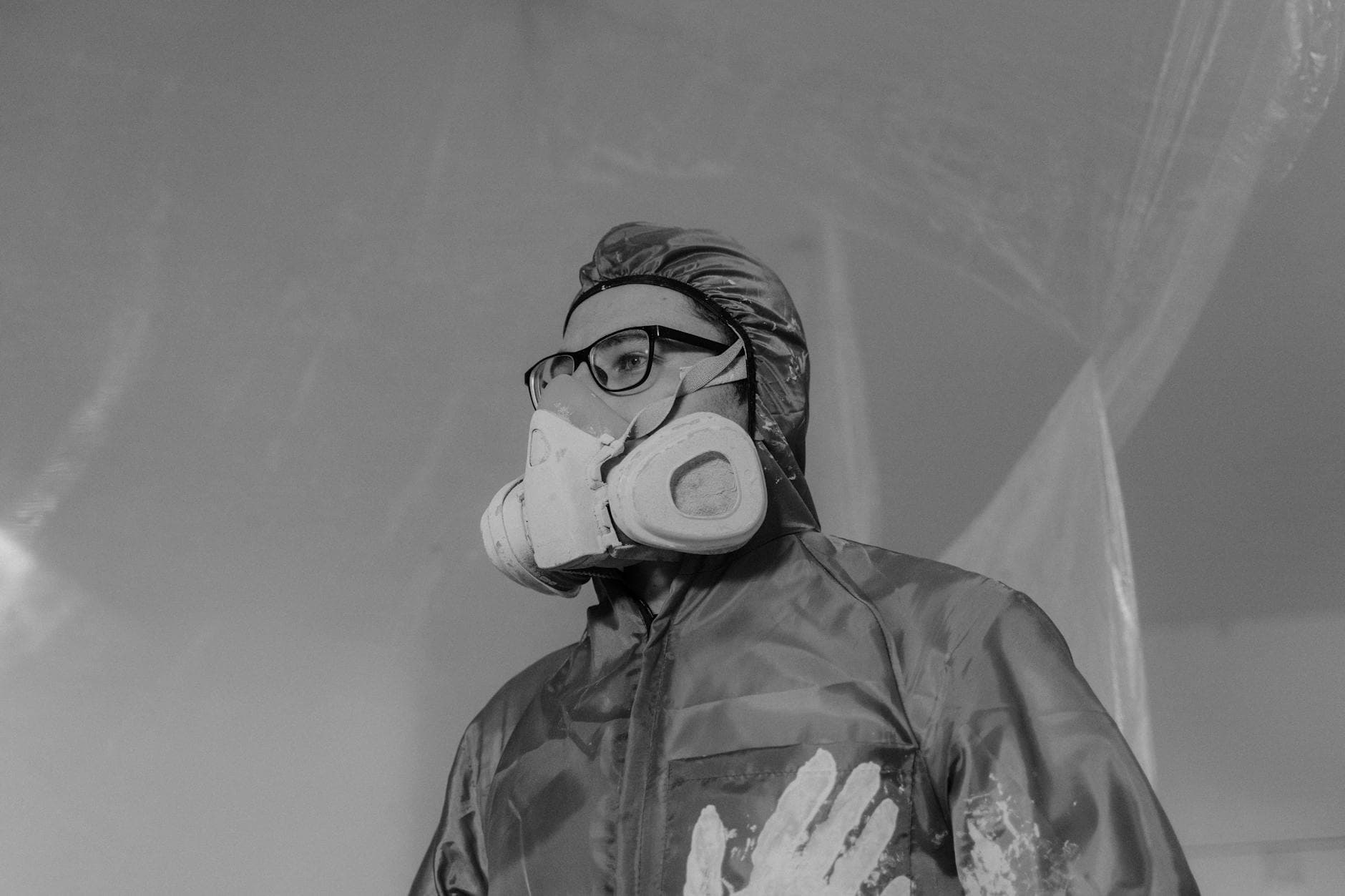
What is an occupational disease claim?
An occupational disease claim is a workers' compensation claim for a medical condition caused by long-term exposure to a workplace hazard rather than by a single, identifiable accident. The hazard might be an airborne particulate, a chemical, a noise level, an infectious agent, or a repeated physical stressor. The key feature is latency — the condition develops gradually, often over years, and may not be diagnosable until long after the exposure has ended.
California Labor Code §3208 defines "injury" broadly to include "any injury or disease arising out of the employment," covering both the acute traumatic injuries most workers think of and the slower-developing diseases that fall under the occupational-disease umbrella
[1]. The statute does not distinguish between a back injury suffered in a single warehouse fall and a respiratory disease developed over twenty years on a foundry floor. Both are compensable injuries under California law if the work was the cause.
Occupational disease claims sit alongside cumulative trauma claims under the same statutory framework, but the medical and evidentiary issues are distinct. A cumulative trauma claim typically involves repeated mechanical stress on a joint or soft tissue. An occupational disease claim more often involves toxicological exposure, infectious-agent exposure, or chronic environmental insult to a body system — pulmonary, neurological, hematologic. The evidence needed to prove the claim is different, and the date-of-injury analysis is different. The statutory umbrella is the same.
Common occupational diseases in California
The most heavily litigated occupational diseases in California include:
- Silicosis — a progressive lung disease caused by inhalation of crystalline silica dust, common in construction, foundry work, stone fabrication (countertops in particular), and mining. Acute and chronic forms exist; advanced silicosis is disabling and irreversible.
- Asbestosis and mesothelioma — fibrotic lung disease and a specific cancer of the pleura, both caused by asbestos exposure. Common in construction, shipyard work, manufacturing, automotive brake repair, and any setting where legacy asbestos materials are disturbed. Mesothelioma latency is famously long — 20 to 40 years between exposure and diagnosis.
- Occupational hearing loss — sensorineural hearing loss caused by chronic exposure to industrial noise. Common in manufacturing, construction, aviation, and any workplace consistently exceeding OSHA noise thresholds.
- Chemical exposure conditions — including lead poisoning (battery manufacturing, painting, smelting), solvent-related neurotoxicity (printing, dry cleaning, manufacturing), and pesticide-related disease (agriculture).
- Occupational cancers — including bladder cancer in workers exposed to aromatic amines, leukemia in workers exposed to benzene, and skin cancers in outdoor workers with chronic UV exposure.
- Infectious disease and bloodborne pathogens — covered by separate statutory provisions for healthcare workers and first responders.
California Labor Code §3208.05 specifically addresses bloodborne-pathogen exposures, covering hepatitis B, hepatitis C, HIV, and similar infectious agents in defined occupational settings
[2]. The statute creates a streamlined framework for claims involving needlestick injuries and similar exposures.
For COVID-19 specifically, California enacted §§3212.86–88 creating presumptions of compensability for certain workers — frontline healthcare workers, first responders, and workers in defined outbreak settings. The presumptions shift the burden of proof and have been heavily litigated since their enactment.
The §5412 date-of-injury rule
The most distinctive feature of occupational disease claims is how California determines the "date of injury." For traumatic injuries, the date of injury is the date of the accident — straightforward. For occupational diseases and cumulative trauma, the date of injury is determined by a different statute and a different rule.
California Labor Code §5412 provides that the date of injury for an occupational disease or cumulative trauma is the date upon which the worker first suffered disability AND either knew, or in the exercise of reasonable diligence should have known, that the disability was caused by the work
[3]. Both elements must be present. Disability without knowledge does not start the clock. Knowledge without disability does not start the clock.
Why this matters: the statute of limitations for filing a workers' comp claim is one year from the date of injury, with extensions available in some cases. For a latent disease, the literal date of last exposure may have been twenty years ago — long outside any conventional limitations period. Section 5412 saves the claim by tying limitations to the first onset of disability with knowledge, not to the exposure history.
In practice, the §5412 date is often the date of a diagnosing physician's report — the moment the worker is told, by a competent medical authority, that their condition is caused by their work. Before that, even a worker with symptoms who suspected work was the cause typically cannot be charged with the kind of "knowledge" the statute requires. The disability prong typically requires either an inability to work, a need for medical treatment beyond first aid, or wage loss attributable to the condition.
The §5412 rule is a powerful protection for workers with long-latency claims, but it is often misunderstood. Workers who hear "you have one year from injury" assume their old asbestos case from a job thirty years ago is dead. It is not necessarily. The clock often does not start until diagnosis.
Proving exposure
The evidentiary core of an occupational disease claim is causation: showing that the workplace exposure caused the disease. Three elements typically need to be developed:
- Employment history reconstruction. A complete chronology of every job that involved exposure to the hazard at issue, with dates, duties, and conditions. For long-tenure workers this can require pulling old W-2s, union records, and personnel files. Co-worker witnesses are often valuable for documenting what the work environment actually looked like decades ago.
- Exposure documentation. Industrial hygiene records, OSHA citations, MSDS sheets, product identification (which manufacturer's asbestos was on which job site, for example), and any monitoring data the employer or contractor preserved.
- Medical causation evidence. A treating physician with relevant expertise — pulmonologist for silicosis, otolaryngologist for hearing loss, oncologist for occupational cancers — plus, in most cases, an occupational medicine specialist or QME who can offer the formal causation opinion the WCAB requires.
Differential diagnosis is critical for diseases with non-occupational causes. A worker with COPD who smoked for thirty years and worked in a foundry needs medical analysis distinguishing the smoking contribution from the occupational contribution. The treating physician and QME both have to address apportionment. A causation opinion that ignores non-occupational risk factors is vulnerable on cross-examination.
Occupational disease cases are won in the medical record. The exposure happened years ago — what wins is whether you can put a clean causal chain between that exposure and what the diagnosing doctor sees today.
Third-party civil claims
Workers' comp is not always the only remedy in occupational disease cases. California Labor Code §3852 expressly preserves a worker's right to bring a civil action against a third party — anyone other than the employer — whose negligence or product caused the injury[4]. Occupational disease cases are some of the most fertile territory for third-party claims, because the diseases are often caused by products manufactured and sold into the workplace by entities that are not the employer.
Common third-party defendants include:
- Asbestos product manufacturers and distributors (a vast and well-developed body of litigation)
- Manufacturers of silica-containing products, particularly engineered stone for countertop fabrication
- Equipment manufacturers whose machinery generated the hazardous exposure (grinders, sandblasters, presses)
- Chemical and solvent manufacturers
- Premises owners and general contractors at sites where the worker was exposed but did not work directly for the owner
- Pesticide manufacturers in agricultural exposure cases
A third-party civil claim is litigated in superior court, not at the WCAB, and operates under different rules — including the right to a jury trial and the availability of damages categories (pain and suffering, loss of consortium) that are not available in workers' comp.
The workers' comp carrier has a statutory lien on any third-party recovery under Labor Code §3858, allowing the carrier to recover what it has paid in benefits out of the civil settlement or judgment
[5]. The lien is negotiable in most cases, and a portion of the third-party recovery typically remains with the worker after the lien is resolved. The interplay between the comp claim and the third-party claim is complex and time-sensitive — third-party claims have their own statute of limitations, and missing it forfeits the recovery regardless of how strong the workers' comp case is.
If you suspect a third-party claim may be available, raise it early. The civil-side discovery and the comp-side medical evaluation can be coordinated to strengthen both, but only if the planning is done at the front of the case rather than after deadlines have started to expire.
This guide is general legal information, not legal advice. For advice about your specific situation, contact our office.
References
- Cal. Labor Code §3208 (definition of injury) — California Labor Code
- Cal. Labor Code §3208.05 (bloodborne pathogen exposures) — California Labor Code
- Cal. Labor Code §5412 (date of injury for occupational disease and cumulative trauma) — California Labor Code
- Cal. Labor Code §3852 (third-party civil actions preserved) — California Labor Code
- Cal. Labor Code §3858 (carrier lien on third-party recovery) — California Labor Code
Talk to an attorney about your case — free, confidential, no fee unless we win.
Past results do not guarantee similar outcomes. Each case is evaluated on its own merits.