Construction injuries and California workers' comp
A construction injury is rarely a single legal claim. The general contractor, the subcontractor, the equipment lessor, the property owner — each of them may carry separate duties on a job site, and an injury that resolves into a single workers' comp file at first often turns out to support more than one path to recovery.
California Labor Code §3208 covers any injury or disease arising out of and in the course of employment, and §3208.1 expressly covers cumulative trauma — making both acute construction site incidents and gradual-onset conditions like silicosis, hearing loss, and disc degeneration compensable
[1].
Multiple potential defendants on a construction site
Construction is one of the few areas of workers' comp where it is common for more than one entity to share legal responsibility for an injury. The general contractor, sub-tier contractors, equipment lessors, manufacturers, and property owners all may have duties on the site. Workers' comp from the direct employer is the exclusive remedy against the employer — but injuries caused by a third party (a different sub on the same site, a manufacturer of defective equipment, a property owner who failed to warn) can support a separate civil claim.
California Labor Code §3852 preserves the worker's right to bring a civil action against a third-party tortfeasor in addition to receiving workers' comp benefits, and §3858 governs the reimbursement and credit rights between the comp carrier and the third-party recovery
[2]. The carrier is typically entitled to a lien on the third-party recovery for benefits paid; net recovery to the worker can still be substantial in serious cases.
If the direct employer was uninsured in violation of California Labor Code §3700, the worker has additional remedies — including benefits through the Uninsured Employers Benefits Trust Fund and, under §3706, a civil action against the uninsured employer with the affirmative defenses of the workers' comp system unavailable to that employer.
Serious and willful misconduct
Where the injury was caused by the employer's serious and willful misconduct, California Labor Code §4553 increases the workers' comp award by 50%. An OSHA citation for a violation that caused the injury is significant evidence in a §4553 claim; so is documented prior knowledge of the hazard combined with deliberate failure to abate[3]. The 50% increase is paid by the employer directly, not the comp carrier, and is not insurable under California law.
"The amount of compensation otherwise recoverable shall be increased one-half ... where the employee is injured by reason of the serious and willful misconduct of ... the employer..."
— California Labor Code §4553
Falls and traumatic events
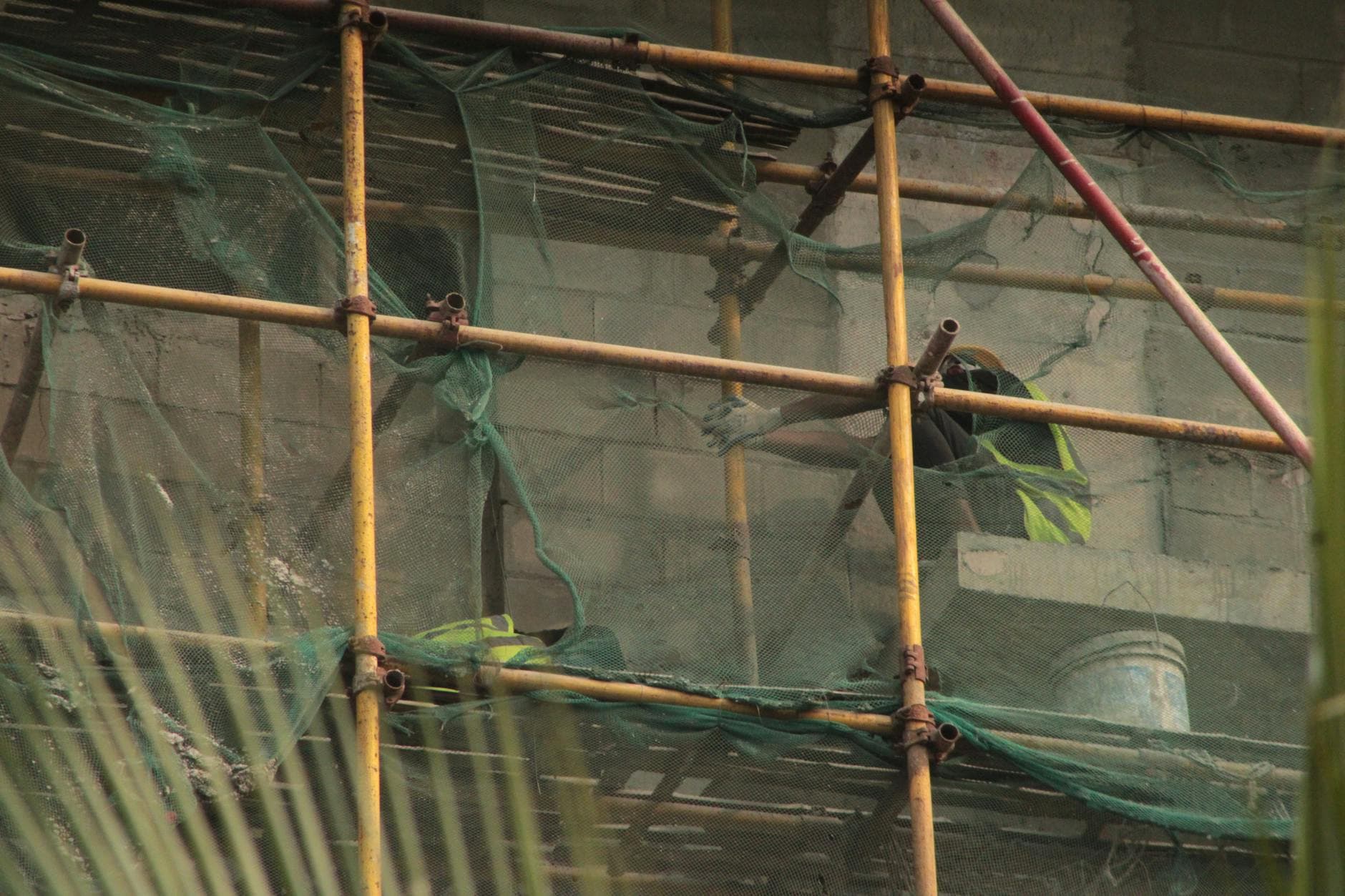
Falls from scaffolding, ladders, roofs, and unprotected edges are the leading cause of construction fatalities. The resulting traumatic injuries — fractured spine, traumatic brain injury, crushed pelvis, internal injuries — qualify for the full range of workers' comp benefits including medical treatment under §4600 (often without practical dollar cap for life-threatening injuries), temporary total disability under §4653, life pension permanent disability under §4659 for ratings of 70% or above, and dependent death benefits under §§4700–4709 (with §4751 governing burial expenses).
Where the fall produced witnessing-related psychiatric injury — a co-worker who watched the fall and developed PTSD — §3208.3 governs that claim, with the violent-act provisions reducing the 51% predominant-cause threshold and the 6-month employment threshold under specific circumstances.
Benefits construction workers may be entitled to
A compensable construction injury supports medical treatment, temporary disability, permanent disability, supplemental job displacement, dependent death benefits, and where applicable serious and willful misconduct increase. Where a third party caused the injury, civil tort remedies are also available.
What the claims process looks like
Reporting begins with written notice to the employer within 30 days under §5400, and completion of the DWC-1 the employer must provide. The §5402 90-day acceptance period runs from the DWC-1 filing, with up to $10,000 in medical care authorized during the investigation period. Disputed claims move to the medical-legal evaluation framework of §§4060–4062 and ultimately the WCAB. Third-party civil claims run on separate (typically two-year) limitations clocks under California Code of Civil Procedure §335.1.
Common insurer denial tactics
Carriers commonly contest construction claims on three theories: misclassification (asserting the worker was an independent contractor); shifted causation (blaming pre-existing conditions or non-industrial activities under §4663); and disputed scope of employment (arguing the injury occurred during a personal errand or unauthorized task). Misclassification arguments must be analyzed against §2775's ABC test for employee status. Apportionment must meet substantial-medical-evidence standards. Scope-of-employment defenses are frequently overstated.
How Winters & Banks helps injured construction workers
Construction cases reward attention to who else might be liable. I coordinate the workers' comp claim with any third-party civil case, pursue serious-and-willful misconduct increases when the evidence supports them, and structure settlements that protect Medicare interests where required.
References
- Cal. Labor Code §§3208, 3208.1 (definition of injury; cumulative injury) — California Labor Code
- Cal. Labor Code §§3852, 3858 (third-party action and reimbursement) — California Labor Code
- Cal. Labor Code §4553 (serious and willful misconduct increase) — California Labor Code
Talk to an attorney about your case — free, confidential, no fee unless we win.
Frequently Asked Questions
Related Practice Areas
- Back & Spine InjuriesWorkers' comp claims for herniated discs, fractures, and chronic back pain caused by your job.
- Warehouse Worker InjuriesWorkers' comp for injuries suffered in distribution centers, fulfillment warehouses, and logistics facilities.
- Repetitive Stress InjuriesWorkers' comp claims for carpal tunnel, tendinitis, and other injuries caused by repeated motions at work.
- Denied ClaimsAppeal wrongfully denied workers' comp claims and fight for the benefits you deserve.
Serving These Areas
We handle workers' comp claims throughout Orange County and the surrounding region.
- Anaheim
- Long Beach
City-specific pages coming in Phase 4.
Get a Free Case Review
Tell us what happened. We'll review your situation and reach out to you. No fee unless we win.
Past results do not guarantee similar outcomes. The information on this page is for general educational purposes only and does not constitute legal advice.