
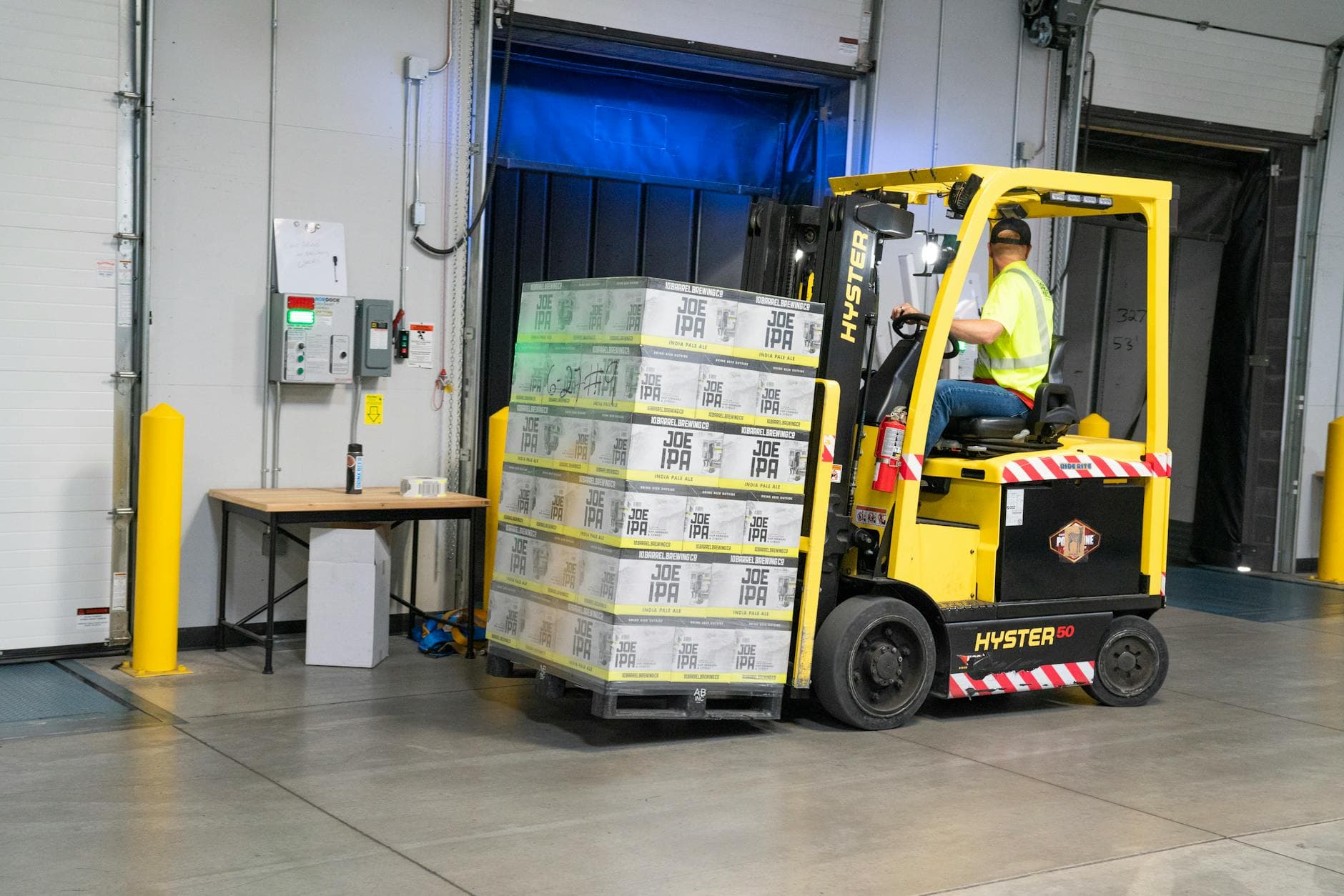
Warehouse injuries and California workers' comp
California's warehousing and logistics industry employs hundreds of thousands of workers in fulfillment centers, distribution warehouses, and ports across Southern California. The same operational pressures that drive throughput — quotas, fast travel paths, repetitive picking and packing, heavy lifting, and around-the-clock shifts — also drive injury rates well above the state average. California Labor Code §3208 defines a workplace "injury" broadly to include any injury or disease arising out of and in the course of employment, and the warehouse environment is squarely within that scope[1].
"'Injury' includes any injury or disease arising out of the employment..."
— California Labor Code §3208
Warehouse claims commonly involve back and shoulder injuries from lifting and reaching; cumulative trauma to the spine, knees, and wrists from repetitive picking and packing; forklift and pallet jack incidents; struck-by injuries from falling product; and slip-and-falls on dock plates and wet floors. Heat illness in non-climate-controlled facilities is increasingly recognized, and California has specific outdoor and indoor heat illness prevention rules under Title 8 CCR §3395 enforced by Cal/OSHA.
How workers' comp interacts with workplace safety law
Workers' comp is a no-fault remedy. It does not require the worker to prove employer negligence. Cal/OSHA enforcement, by contrast, addresses employer compliance with safety regulations. The federal "general duty clause" at 29 U.S.C. §654(a)(1) and California's parallel duty in Labor Code §6400 require employers to provide a place of employment "free from recognized hazards" — and citations under either authority are evidence that may support a claim of serious and willful misconduct under California Labor Code §4553, which can increase compensation by 50% if proven[2].
For temp and staffing agency workers, both the agency and the host warehouse can be considered employers under California law for safety and workers' comp purposes. The agency typically carries the comp policy, but multi-employer worksite rules can preserve other claims as well.
Common causes of warehouse injuries
Lifting injuries dominate. The combination of weight, rate, repetition, and awkward postures (stacking high, retrieving from low pallets, twisting under load) produces both specific lumbar and cervical injuries and cumulative spine injuries over time. Forklift incidents — being struck, run over, or crushed against racking — are a leading cause of severe and fatal warehouse injuries in California. Slip-and-falls happen on dock plates, in cooler aisles, and around damaged pallets. Repetitive scanning, packing, and labeling produces upper-extremity cumulative trauma — carpal tunnel, shoulder impingement, lateral epicondylitis. Heat illness arises in roof-loaded distribution centers without adequate ventilation.
Benefits warehouse workers may be entitled to
A compensable warehouse injury can support medical treatment under §4600, temporary disability under §4653 at two-thirds of average weekly earnings (subject to the maximums in §4453), permanent disability rated under the 2005 schedule and paid at the rates in §4658, and a $6,000 supplemental job displacement voucher where the worker cannot return to the same job. Where an uninsured employer is involved, the Uninsured Employers Benefits Trust Fund may pay benefits and pursue reimbursement under §3700 et seq. Where a third party — a forklift manufacturer, a contractor, a property owner — caused the injury, a separate civil claim may also be available, with the workers' comp carrier holding a lien on civil recovery under §§3852–3859.
What the claims process looks like
Reporting begins with written notice to the employer within the 30-day window of §5400 and completion of the DWC-1 claim form the employer must provide. Once the DWC-1 is filed, California Labor Code §5402 gives the carrier 90 days to accept or deny — and provides up to $10,000 in medical treatment that must be authorized during the investigation period[3]. Disputed cases proceed into the medical-legal evaluation framework of §§4060–4062 and ultimately to the Workers' Compensation Appeals Board.
Common insurer tactics
Three patterns repeat. Carriers argue that an injury reported at the end of a shift "must have happened off the clock" — even when symptoms began on the clock. They pin cumulative trauma to age and prior employment rather than current job duties. And they push apportionment under §4663 to non-industrial factors when the medical record supports a higher industrial percentage. Each is answerable, but the worker has to preserve the timeline by reporting promptly and seeing a treating physician inside the MPN.
How Winters & Banks helps warehouse workers
Warehouse cases turn on whether the timeline is preserved. I make sure the DWC-1 is filed on time, treatment selection within the MPN is documented, third-party liability is assessed early, and the carrier's apportionment moves are answered with substantial medical evidence.
References
- Cal. Labor Code §3208 (definition of injury) — California Labor Code
- Cal. Labor Code §§6400, 4553 (workplace safety duty; serious and willful misconduct) — California Labor Code
- Cal. Labor Code §5402 (90-day presumption; $10,000 treatment) — California Labor Code
Talk to an attorney about your case — free, confidential, no fee unless we win.
Frequently Asked Questions
Related Practice Areas
- Back & Spine InjuriesWorkers' comp claims for herniated discs, fractures, and chronic back pain caused by your job.
- Cumulative Trauma InjuriesWorkers' comp claims for repetitive-strain and gradual-onset injuries caused by years of job duties.
- Repetitive Stress InjuriesWorkers' comp claims for carpal tunnel, tendinitis, and other injuries caused by repeated motions at work.
- Construction InjuriesWorkers' comp and third-party claims for injuries on construction sites, including falls, equipment accidents, and exposure injuries.
Serving These Areas
We handle workers' comp claims throughout Orange County and the surrounding region.
- Long Beach
- Anaheim
City-specific pages coming in Phase 4.
Get a Free Case Review
Tell us what happened. We'll review your situation and reach out to you. No fee unless we win.
Past results do not guarantee similar outcomes. The information on this page is for general educational purposes only and does not constitute legal advice.